Steel Structures
General steel structures usually require a strength verification by analysis. This is normally carried out to established codes, for example
- Eurocode 3 (EN 1993)
- ANSI/AISC 360
- ASCE 7
- DIN 18800 (superseded by the Eurocodes)
Where component-specific codes exist, these are applied in addition.
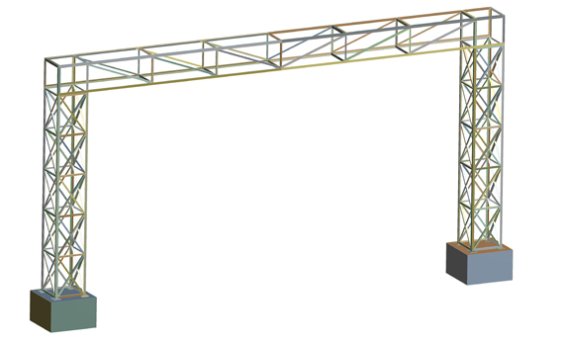
Steel structures may be subjected to a combination of different actions, which can vary by region. A general distinction is made between permanent, variable and accidental actions:
- permanent actions: self-weight, earth pressure, anticipated settlements
- variable actions Q: imposed loads, crane loads, snow, wind, temperature
- accidental actions: impact loads, earthquake, explosion, fire
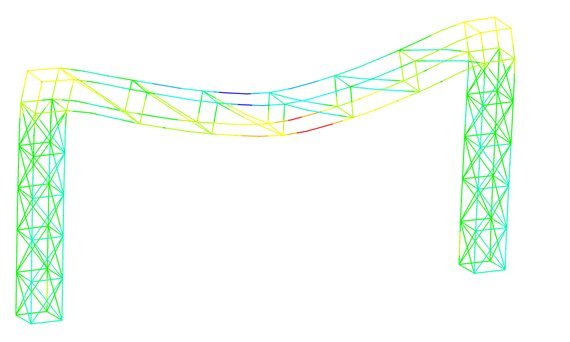
As a rule, several verifications are required:
- the ultimate limit state (ULS) verification demonstrates that the structure is sufficiently safe against structural failure. The resulting stresses are compared against the material properties.
- a serviceability limit state (SLS) verification requires an analysis of the magnitude of the deformations that occur. Deformations are analysed and compared against the values permissible for the component (e.g. L/300).
- the stability verification assesses stability failure of the structure due to compressive stresses. Here the deformation of the structure is analysed as a function of the applied load.
Besides the steelwork itself, base plates and connecting elements such as welds, bolts and foundation anchors including dowels are also verified by analysis.
Where required, we are also able to familiarise ourselves at short notice with other codes (e.g. customer specifications or national regulations). We can of course also work to your own in-house guidelines. If your product is not covered by any code, we can work with you to develop new assessment criteria specific to your product. With plastic components, for example, the evaluation of results is often not standardised; here, assessment criteria for new designs can be established by comparative re-analysis of existing, proven components.
Have we caught your interest?
Then get in touch and we will get back to you promptly.
